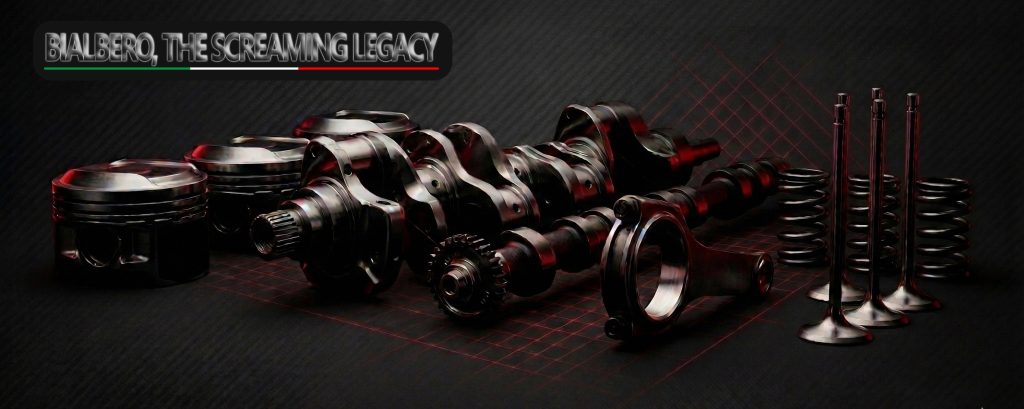
Anyone who puts an Alfa Bialbero on the water is not building a boat. He is building a provocation against physics. The path from a gentle idle at the traffic light to a screaming inferno at 8,000 rpm on the River Po runs through a merciless list of modifications. We leave behind everything that makes a car comfortable and keep only what makes us faster. The result is no longer just an engine. It is a hydrodynamic powerplant that lives for one single moment only: the instant when the hull begins to fly across the water.
From road engine to river power unit
The transformation begins with one simple, ruthless question: what makes me faster? Everything else gets thrown out. Unnecessary weight is eliminated everywhere. An alternator costs power, and in racing we do not need a generator. The battery is enough. So it goes. The same applies to the original mechanical water pump. In a hydroplane, cooling does not follow production-car logic. It follows racing logic. The boat is cooled by dynamic water pressure. The water arrives under pressure, and the flow is not regulated automatically, but by the driver. In the cockpit there is a control valve that allows the flow to be adjusted manually. That is not a comfort feature. That is control. Temperature is power, and power is only worth something if it stays stable. The clutch and the original engine mounts also have no place in a hydroplane. Everything designed for road use becomes ballast in a racing boat. Every unnecessary kilogram, every useless rotating mass, every component that merely comes along for the ride costs speed in the end.

Installed like in a car? Forget it.
A hydroplane dictates the mechanics. And one of the hardest consequences is this: because of the propeller’s direction of rotation, the engine is installed the opposite way from how it would be in a car. In practical terms, this means the engine is not coupled at the flywheel side, but directly to the crankshaft on the other side. It is a completely different philosophy from automotive engineering. And there is a practical reason for it that every racing driver understands immediately. We need a clutch that can be disengaged manually. That way, the engine can be warmed up in the pit lane without the propeller turning. Warm-up without risk, without propeller load, without unnecessary movement in the shaft. In racing, these are the small details that decide whether things stay calm or turn into stress.
Oil is not just lubrication. Oil is survival.
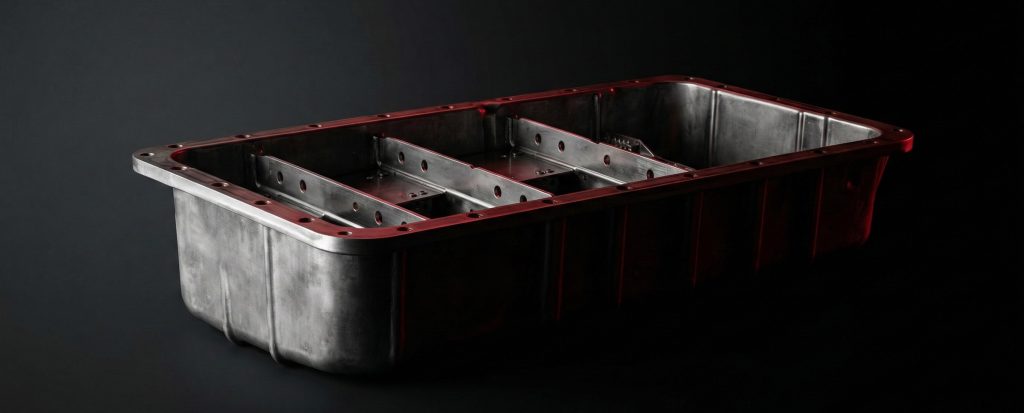
Then comes the subject of oil. And here there is no romance, only physics. The oil pan has to be modified with baffles because the engine works differently in a boat than it does in a car. Impacts, movement, lean angle, constant load. If the oil moves, the oil pressure moves with it. And if the oil pressure disappears, the engine disappears with it. That is why the engine also receives an extremely large, water-cooled oil cooler. High rpm means heat. And heat is the enemy of the oil film. Anyone who wants to go fast on the water has to treat oil temperature and oil supply as if they were a system of their own. Because they are.
Rotating mass under control
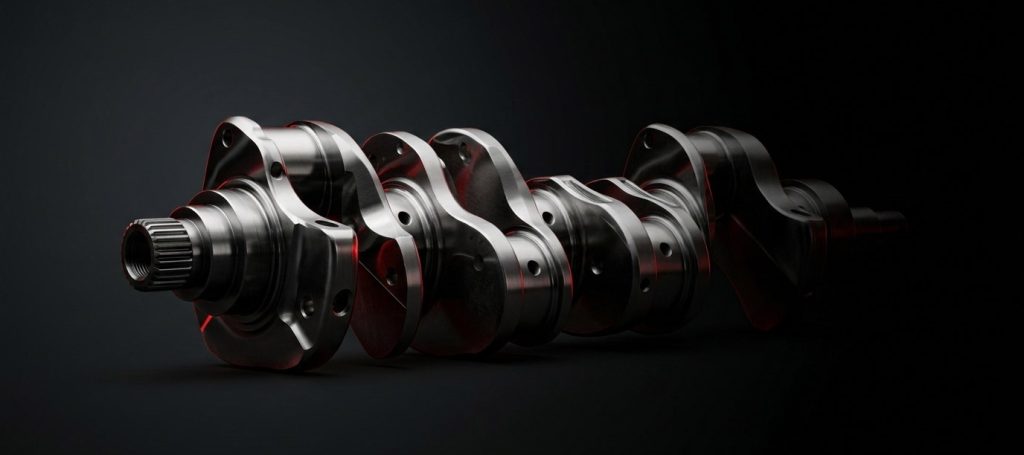
The next step is to lighten the flywheel. Not for show, but out of necessity. A hydroplane lives from the engine revving high, revving cleanly, revving quickly. Then comes the step that real engine people love: the crankshaft is lapped and balanced together with the flywheel as one single unit. Precisely. Because at high rpm, the engine must not simply run, it must remain mechanically stable. And stability at rpm means durability. Durability is the currency we pay with here.

Internal components built for rpm, not everyday use
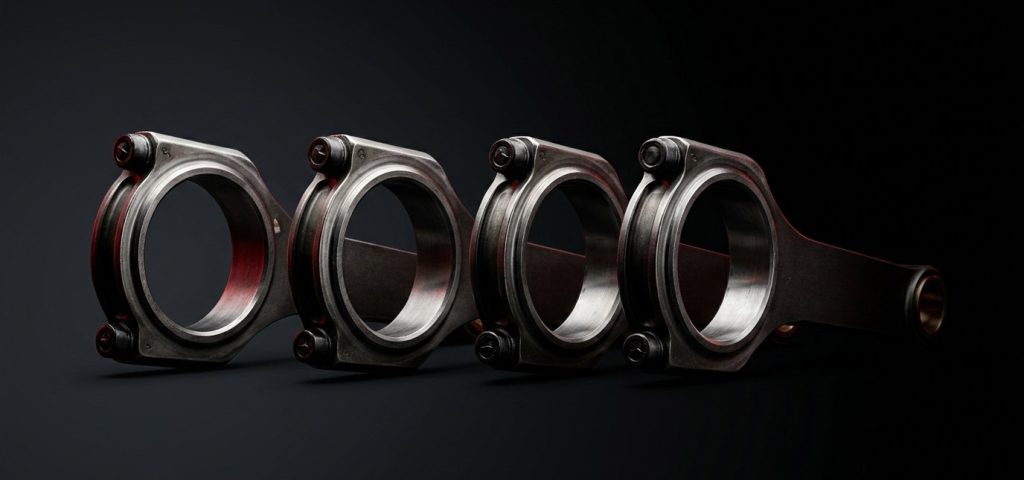
Then we go into the core of the engine. Different pistons and different connecting rods are installed. Pistons with very short skirts. Connecting rods that are ultra-strong and at the same time extremely light. The goal is clear: maximum rpm capability, maximum stability, minimum mass where mass becomes harmful. All bearings and bearing shells are replaced with racing versions. This is not some tuning gimmick. It is mandatory. Because an engine that is held at high rpm continuously in a boat faces completely different demands in terms of load pattern, temperature window and durability.
Cylinder head: learning to breathe, learning to live at the top
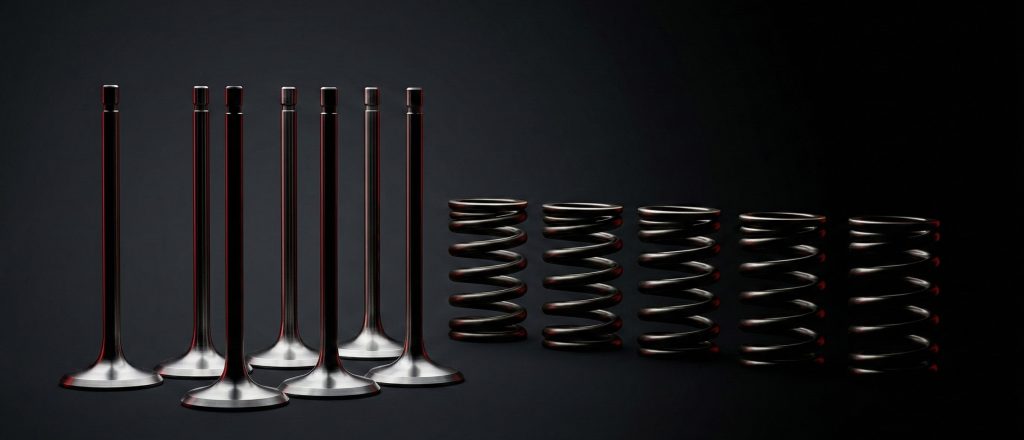
Then comes the cylinder head. Intake and exhaust ports are reworked. Better valve guides are installed. Stiffer valve springs. Stronger valves. And finally aggressive camshafts. The whole package has one purpose: the engine must be stable at high rpm and designed for maximum revs. Not for easy torque, not for road manners, but for what a hydroplane needs when it is meant to run truly fast.

Carburettors and lean angle: the boat changes everything
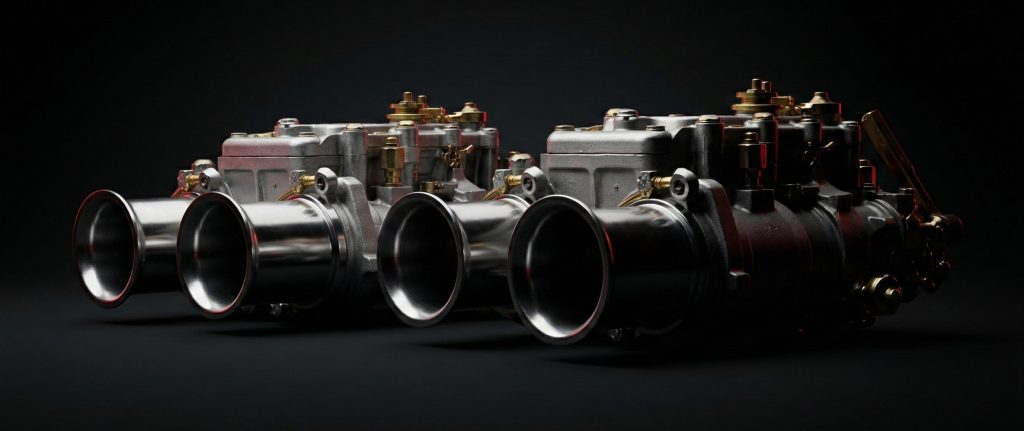
The carburettors also need to be modified because the engine is installed at an angle inside the boat. The reason is the driveshaft. Geometry always wins. And if the geometry forces the engine to tilt, mixture preparation still has to work perfectly. In racing there are no misfires, no “it’ll be fine,” no transition problems.
Rigid driveshaft, rigid truth
By the way, the driveshaft is mounted rigidly in the boat. And that has a consequence that cannot be talked away. The engine is bolted directly to the hull and has no rubber mounts. No isolation, no flex, no give. The system is hard. Direct. Honest. And that is exactly why everything has to be right, because the boat mercilessly feeds back every vibration, every imbalance and every misalignment.

The Italians’ logical conclusion
If you add up all these requirements, you inevitably arrive at the conclusion that the Italians had already understood long ago in the era of historic hydroplanes. The rpm required to make a hydroplane truly fast has to be high. And that is why their logical conclusion was simple:
Alfa Romeo, 4 cylinders, Bialbero.
An engine that can rev. An engine that lives at the top end. An engine that belongs in this world, whether you love it on the road or on the water, in the world of Historic Hydroplanes and the myth of the Raid Pavia Venezia. This is not just any conversion. This is professional-level marinisation. A road engine becomes a racing engine for the river. And that is exactly where the story begins, a story you do not just hear, but feel, the moment the engine climbs cleanly through the revs and the hydroplane truly begins to run.